Deployment
Where HALEU Comes From: The Fuel Supply Behind Advanced Reactors
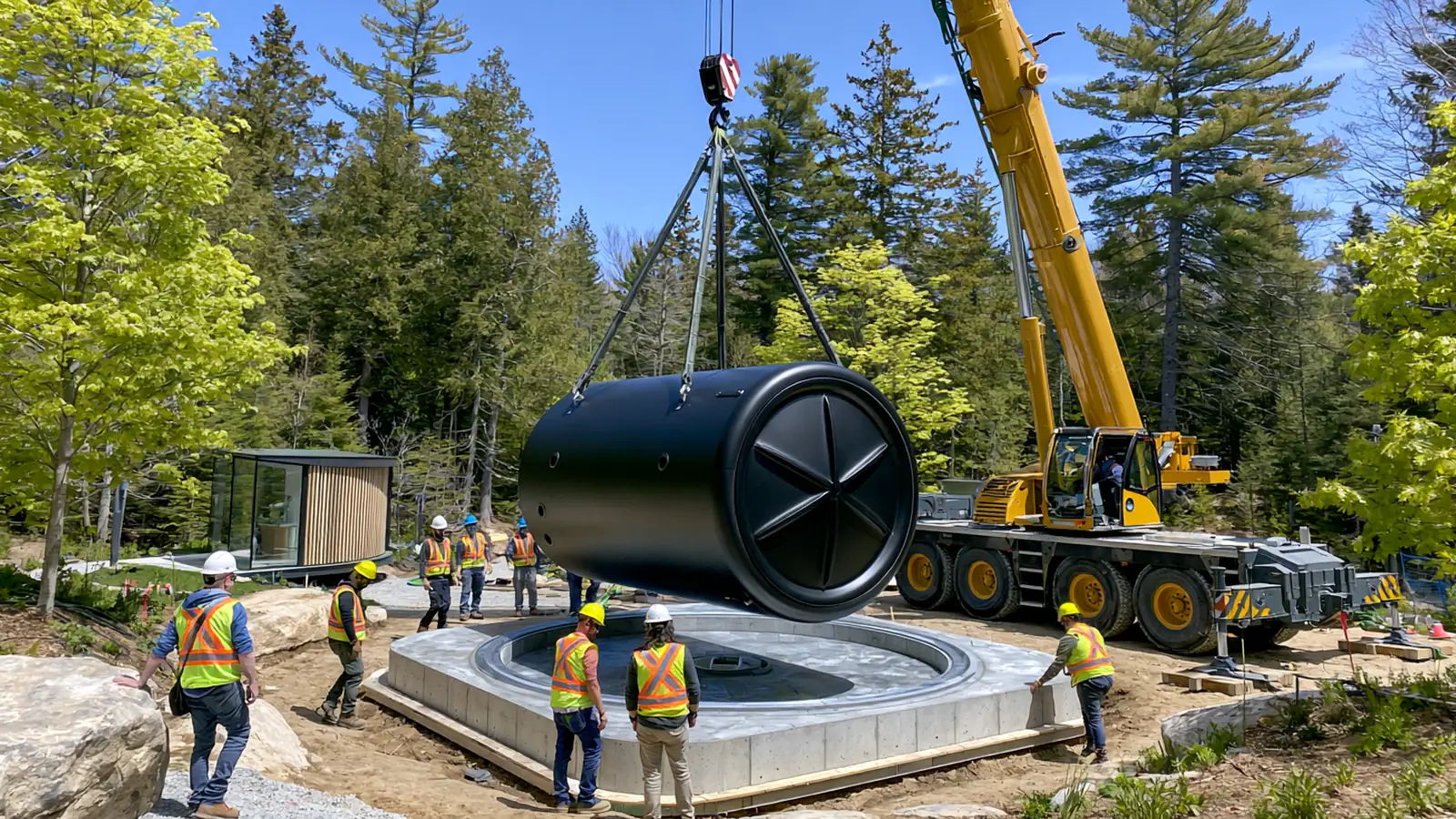
Most advanced reactor designs, including <a class="link" href="/resources/what-is-a-nuclear-microreactor">microreactors</a>, need a fuel called HALEU: high-assay low-enriched uranium, enriched to between 5 and 20 percent uranium-235. The physics of using it is well understood. The constraint is supply. A commercial HALEU supply chain in the United States is still being built, and that timeline, more than any engineering question, is what shapes when advanced reactors can actually be deployed.
This guide explains what HALEU is, why the newer reactor designs need it, where it currently comes from, and how the Department of Energy is standing supply up. It is written for people evaluating deployment timelines rather than for fuel engineers, and it treats fuel as what it actually is for this industry right now: a schedule risk that belongs in every honest project plan.
That includes ours. RankShield Energy is a pre-applicant with the NRC, and HALEU availability is a real constraint on our program exactly as it is for the rest of the field [1]. Any developer whose schedule does not account for fuel is describing an engineering timeline rather than a deployment one.
Key takeaways
- HALEU is uranium enriched to between 5 and 20 percent U-235, above the roughly 5 percent used by today's commercial fleet.
- Many advanced and microreactor designs need it to stay small and run for years between refuelings.
- The binding constraint is supply, not physics. A commercial domestic supply chain is still being established.
- The Department of Energy's HALEU Availability Program exists specifically to bridge that gap for developers.
- Treat fuel availability as a schedule input. A timeline that ignores it is incomplete.
What HALEU is, and how it differs from today's reactor fuel
HALEU stands for high-assay low-enriched uranium. The NRC defines it as uranium enriched to greater than 5 percent and less than 20 percent uranium-235 [2]. The commercial reactors operating in the United States today generally run on uranium enriched to about 5 percent or below, so HALEU sits in a band above the existing fleet's fuel and below the 20 percent threshold that separates low-enriched from high-enriched material.
That band matters because enrichment level drives how much fissile material fits into a given volume of core. A higher assay means more energy is packed into less space, which is what allows a reactor to be physically small and still sustain a chain reaction for a useful length of time.
It is worth being precise about the word "high" here, because it does the opposite of what it sounds like. HALEU is still low-enriched uranium. The high-assay qualifier distinguishes it from conventional commercial fuel, not from the high-enriched material used in other contexts.
Why advanced and microreactor designs need it
The appeal of a microreactor is that it is small enough to be factory-built, transported largely complete, and installed where power is needed. Those properties are in tension with reactor physics: the smaller the core, the harder it is to sustain a chain reaction and the sooner the reactor runs short of reactivity.
Higher enrichment is the main lever that resolves the tension. It lets a designer keep the core compact while still banking enough reactivity to run for years rather than months between refuelings. That is why the Department of Energy's microreactor program work is oriented around fuels in this class [4], and why so many advanced designs converge on the same fuel requirement despite differing on nearly everything else.
The practical consequence is that a large share of the advanced reactor industry is waiting on the same input. That shared dependency is what turns fuel from an engineering detail into a sector-wide scheduling problem.
Where the supply actually comes from today
This is the part most coverage skips. A commercial HALEU supply chain at the scale the industry will need does not yet exist in the United States, which is precisely why a federal program was created to address it. The Energy Act of 2020 directed the Department of Energy to establish a program to make HALEU available for advanced reactor development, and the HALEU Availability Program is the result [1].
In practice that has meant DOE working to bridge the gap while commercial enrichment capacity is built out, including distributing allocations of HALEU to selected advanced reactor developers so that demonstration and first-core work can proceed [3]. Allocation is a bridge, not a market. It is how the first reactors get fueled while a durable commercial supply is established behind them.
For anyone assessing a developer, the useful question is not whether they have solved fuel. Almost nobody has solved fuel independently. The question is whether their plan describes a credible path and whether their schedule reflects that the path is still being built.
What this means for deployment timelines
Fuel availability belongs in the schedule as a first-order input, alongside licensing. A developer can complete design work, testing, and regulatory engagement on time and still be unable to start a reactor without fuel in hand. Those two tracks, the regulatory one and the fuel one, run in parallel and both have to land.
This is also why fuel is one of the questions in our vendor evaluation guide. A developer who names fuel as a constraint and describes their supply path is giving you a deployment timeline you can plan against. One who omits it entirely is giving you something less useful, however impressive the engineering behind it.
None of this is a reason for pessimism about the sector. It is a reason to read timelines carefully. The reactors are moving, the licensing frameworks are modernizing, and the fuel supply is being built. Those three clocks are simply not synchronized yet, and the honest version of any schedule says so.
Frequently asked questions
What does HALEU stand for?
HALEU stands for high-assay low-enriched uranium. The NRC defines it as uranium enriched to greater than 5 percent and less than 20 percent uranium-235 <sup><a href="#src-2">[2]</a></sup>. Despite the word high, it is still low-enriched uranium. The high-assay qualifier distinguishes it from the roughly 5 percent enriched fuel used in the current commercial fleet, not from high-enriched material used in other applications. The 20 percent figure is the recognized boundary between low-enriched and high-enriched uranium.
Why do microreactors need HALEU instead of conventional fuel?
Because small cores and long refueling intervals both push in the same direction. A compact core has less material to sustain a chain reaction, and a reactor intended to run for years without refueling needs to bank enough reactivity up front. Higher enrichment addresses both by packing more fissile material into less volume. Conventional fuel at around 5 percent enrichment makes it difficult to build a reactor that is simultaneously small, transportable, and long-running, which is the combination most microreactor designs are pursuing.
Is HALEU available commercially in the United States today?
Not at the scale the advanced reactor industry will ultimately need. That gap is the reason the Department of Energy established the HALEU Availability Program under the Energy Act of 2020, to make the fuel available for advanced reactor development while commercial capacity is built out <sup><a href="#src-1">[1]</a></sup>. DOE has been distributing allocations to selected developers so early demonstration and first-core work can proceed <sup><a href="#src-3">[3]</a></sup>. That is a deliberate bridge while a durable commercial supply chain is established.
How should fuel supply affect how I read a developer's schedule?
Treat it as a first-order input rather than a footnote. Licensing progress and fuel availability are parallel tracks, and a project cannot start a reactor on regulatory progress alone. A developer who names fuel as a schedule constraint and describes their supply path is giving you a deployment timeline. One whose plan treats fuel as already solved is more likely giving you an engineering timeline, which is a different and less useful thing when you are planning around a delivery date.
Sources
- U.S. Department of Energy, Office of Nuclear Energy. HALEU Availability Program. Accessed July 2026
- U.S. Nuclear Regulatory Commission. High-Assay Low-Enriched Uranium (HALEU). Accessed July 2026
- U.S. Department of Energy. U.S. Department of Energy to Distribute Next Round of HALEU to U.S. Nuclear Industry. 2025
- Idaho National Laboratory / GAIN. A Microreactor Program Plan for the Department of Energy (INL/EXT-20-58919 Rev. 4). June 2025
This guide reflects the state of HALEU supply and advanced-reactor fuel programs as of July 2026. This area is moving quickly. Check back if the Department of Energy or the NRC issues new allocations or guidance.
About this article. RankShield Energy is a pre-applicant engaged in early regulatory interaction with the U.S. Nuclear Regulatory Commission (NRC). Nothing here should be read as a representation that any RankShield Energy design, product, or facility is NRC-approved, licensed, or certified, or that any safety, performance, or operational characteristic has been demonstrated or accepted by the NRC. Descriptions of reactor and system behavior reflect design intent and are subject to analysis, testing, and regulatory review. This article is for general educational purposes and is not engineering, legal, regulatory, or investment advice.
A note on how we write about our own reactor
HELIX is in pre-application development. Where this article touches our design, every figure is a design target and every physics result is unqualified screening, labeled as such. We cite authoritative sources (NRC, DOE, IAEA, national laboratories) and never invent statistics.
RankShield Energy · HELIX · pre-application