Verification & trust
How to Verify an Autonomous Microreactor Is Operating Safely
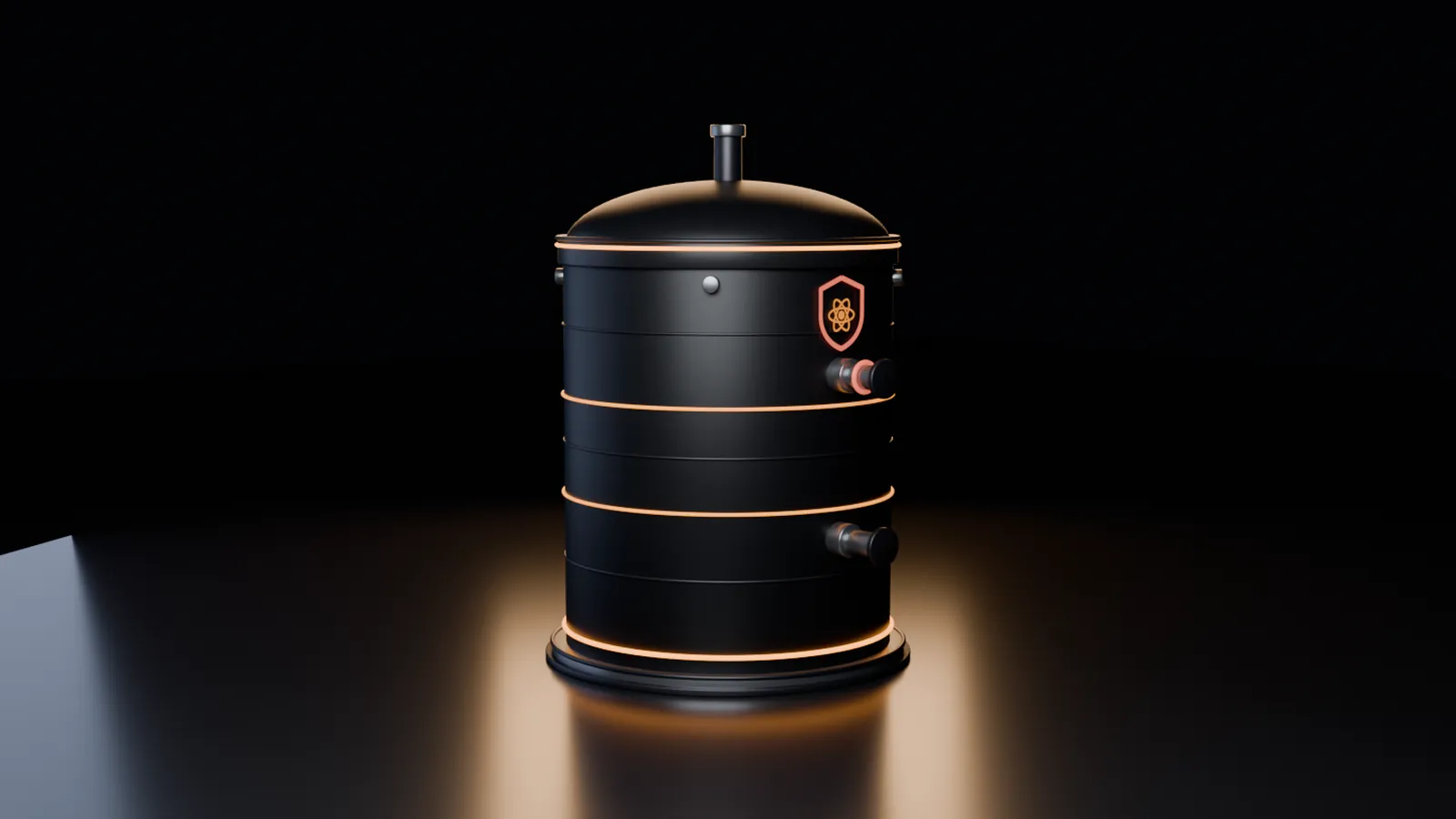
You verify an autonomous microreactor the way you verify any critical system you cannot stand next to: an independent party, not the operator, continuously confirms what the reactor is doing and records that confirmation so someone else can check it later. Verification is a separate function from operation. For a reactor designed to run with fewer people on site, that function has to be continuous, independent, and hard to alter after the fact.
That is the whole question behind this post. As microreactors move toward autonomous and remotely operated designs, the hard problem is no longer only building the reactor. It is proving, to a regulator, an insurer, a lender, or a grid operator, that the reactor is doing what its operator says it is. In July 2026, Idaho National Laboratory and university partners demonstrated remote, real-time autonomous power control of a research reactor, with the reactor's safety systems retaining control throughout [1]. That milestone shows the operating model is becoming real. It also sharpens the question of how anyone outside the control room confirms the reactor is operating safely.
RankShield Energy is a pre-applicant with the U.S. Nuclear Regulatory Commission (NRC), which means we are engaged in early regulatory interaction and hold no license or approval. This article is educational. It explains the verification model, why the verifier cannot be the vendor, and what has actually been demonstrated so far. What you will not find in most vendor material is that last distinction, and it is the one that matters most.
Key takeaways
- Verifying an autonomous microreactor means an independent party continuously confirms reactor state and commands, not the operator vouching for itself.
- A reactor vendor cannot be its own independent verifier; independence is structural, not a matter of good intentions.
- Independent verification records reactor state so a regulator, insurer, or lender can check it after the fact.
- Remote, autonomous reactor control has been demonstrated at national-lab scale; independent verification of it is the open frontier.
- If you are evaluating a microreactor, ask who verifies it and whether that party is separate from the operator.
From resident inspector to continuous verification
For the current U.S. fleet, oversight leans heavily on people physically present: resident inspectors stationed at each plant who observe operations directly. An autonomous or remotely operated microreactor changes that picture. When a reactor is designed to run with reduced on-site staff, the thing that reassures an outsider can no longer be a person walking the floor. It has to be continuous verification of the reactor's reported state and the commands it receives.
This is a shift in kind, not just degree. On-site presence samples a reactor a few times; continuous verification watches every operating hour. The proposed NRC framework for microreactors, published in 2026 as 10 CFR Part 57, is built around risk-informed, consequence-based oversight rather than assuming a full on-site crew [3]. That rule is proposed, not final, and its comment period has closed. Reading it plainly, it points the industry toward a model where trust in day-to-day operation is established through monitoring and analysis, not only through bodies on site.
The practical consequence is simple. If fewer people are present, more of the safety case rests on what the reactor reports about itself. That raises an obvious follow-up: can you trust what a system says about its own condition?
Why the verifier cannot be the vendor
A party that both operates a reactor and certifies its own status has a conflict no amount of engineering removes. If the operator's own system is the only thing confirming the operator's own performance, an outside party has no independent basis to rely on it. Independent verification means the confirming party is structurally separate from the operator, so its confirmation carries weight a self-report cannot.
This is not a criticism of any vendor's competence. It is a structural point that other industries settled long ago. In computer security, the internet's attestation architecture (IETF RFC 9334) formalizes a distinct role called the Verifier, which appraises evidence about a system and produces results that a separate relying party can trust [2]. The design assumption is that the thing being checked does not get to be its own checker. The same logic applies to a reactor: the operator proposes, an independent verifier confirms, and a third party relies on the verifier rather than on the operator's word.
Here is the uncomfortable version, stated plainly. "Trust us, the reactor is fine" is not a safety case. It may be true. But truth an outsider cannot check is not the same as truth an outsider can rely on, and for something as consequential as a reactor, the difference is the entire point.
What independent verification of reactor state looks like
Independent verification of reactor state is the continuous, third-party confirmation that a reactor's actual condition matches what its operator reports, recorded so the confirmation can be checked later. In practice it has three parts. First, reactor state (temperatures, power level, control positions, and the status of safety functions) is measured. Second, an independent verifier, separate from the operator, appraises that evidence against what the operator claims and what the design permits. Third, the result is written to a tamper-evident record that a regulator, insurer, or lender can inspect after the fact. RankShield Energy's verification approach is designed around this separation of roles, and independent, machine-checkable confirmation of both reactor state and the commands sent to the reactor. The design intent is that no single party, including the operator, can quietly rewrite what happened. All of this is design intent and is subject to analysis, testing, and NRC review; nothing here has been demonstrated to or accepted by the NRC.
The reason this matters to a buyer is durability of trust. A dashboard tells you what the vendor's software wants to show you right now. An independent, recorded verification tells a lender in three years what the reactor actually did, in a form the lender can check without asking the vendor to vouch for itself.
What has actually been demonstrated, and what has not
Remote and autonomous reactor control has moved from concept to demonstration. In July 2026, Idaho National Laboratory and university partners achieved remote, real-time autonomous power control of a research reactor, with safety systems retaining control throughout the test [1]. That is a national-lab demonstration of the operating model. It is not a demonstration of any commercial reactor's safety, and it is not RankShield Energy's result.
The honest state of the field is that the operating model (remote, reduced-staff, increasingly autonomous) is being proven, while independent verification of that model is the open frontier. National-lab research treats the digital twin and remote-operations tooling as part of a verification path, but translating that into an independent, buyer-facing verification layer is work still in progress across the industry. Anyone claiming their autonomous reactor's safety is already proven, certified, or approved is overstating where the field is. The correct framing for every serious developer, including us, is design intent subject to testing and regulatory review.
Frequently asked questions
Who verifies an autonomous microreactor if no one is on site?
An independent verifier does: a party structurally separate from the operator that continuously confirms the reactor's reported state and commands against what the design permits, and records that confirmation. This is different from the operator's own monitoring software. The point of independence is that the confirming party has no stake in the reactor looking good, so a regulator, insurer, or lender can rely on its confirmation rather than on the operator's self-report. Regulatory oversight of the reactor itself remains with the NRC; independent verification is a technical function that supports, and does not replace, that oversight.
What does continuous verification of reactor state actually mean?
It means the reactor's condition is confirmed every operating hour, not sampled occasionally. Reactor state includes measurable quantities such as power level, temperatures, control positions, and the status of safety functions. Continuous verification compares that measured state, on an ongoing basis, against what the operator reports and what the design allows, and writes the result to a record that can be checked later. The goal is that gaps between what is claimed and what is happening are caught as they occur, rather than discovered after the fact or not at all.
Can a reactor be trusted to run safely with reduced on-site staff?
That is exactly what the proposed NRC Part 57 framework is designed to evaluate, and it is proposed rather than final <sup><a href="#src-3">[3]</a></sup>. Reduced-staff and remote operation shift more of the safety case onto what the reactor reports and how that reporting is verified. Whether a specific design earns that trust depends on analysis, testing, and NRC review of that design. No facility today is licensed to operate unattended, and safety-significant actions keep a human in the loop. The verification question is separate from, and additional to, the reactor's own engineered safety.
Is independent verification the same as NRC approval?
No. Independent verification is a technical function performed by a party separate from the operator. NRC approval is a regulatory determination made by the federal regulator. A developer can build an independent verification layer and still be, as RankShield Energy is, a pre-applicant with no license or approval. The two support each other but are not the same thing, and no verification approach substitutes for NRC review.
Sources
- Idaho National Laboratory. Researchers achieve remote, autonomous power control of a research reactor in real time. July 2026
- Internet Engineering Task Force (RFC Editor). RFC 9334: Remote ATtestation procedureS (RATS) Architecture. January 2023
- U.S. Nuclear Regulatory Commission. Licensing Requirements for Microreactors and Other Reactors With Comparable Risk Profiles (proposed 10 CFR Part 57). Federal Register, May 2026 (91 FR 23628)
- U.S. Nuclear Regulatory Commission. Pre-Application Activities for Advanced Reactors. Accessed July 2026
This guide reflects the state of microreactor verification and NRC rulemaking as of July 2026. Proposed rules such as 10 CFR Part 57 are not final and may change. This area is evolving rapidly; check back if the rule is finalized or if the NRC issues new guidance.
About this article. RankShield Energy is a pre-applicant engaged in early regulatory interaction with the U.S. Nuclear Regulatory Commission (NRC). Nothing here should be read as a representation that any RankShield Energy design, product, or facility is NRC-approved, licensed, or certified, or that any safety, performance, or operational characteristic has been demonstrated or accepted by the NRC. Descriptions of reactor and system behavior reflect design intent and are subject to analysis, testing, and regulatory review. This article is for general educational purposes and is not engineering, legal, regulatory, or investment advice.
A note on how we write about our own reactor
HELIX is in pre-application development. Where this article touches our design, every figure is a design target and every physics result is unqualified screening, labeled as such. We cite authoritative sources (NRC, DOE, IAEA, national laboratories) and never invent statistics.
RankShield Energy · HELIX · pre-application