Verification & trust
The Digital Twin as a Verification Layer for Remote Reactor Operations
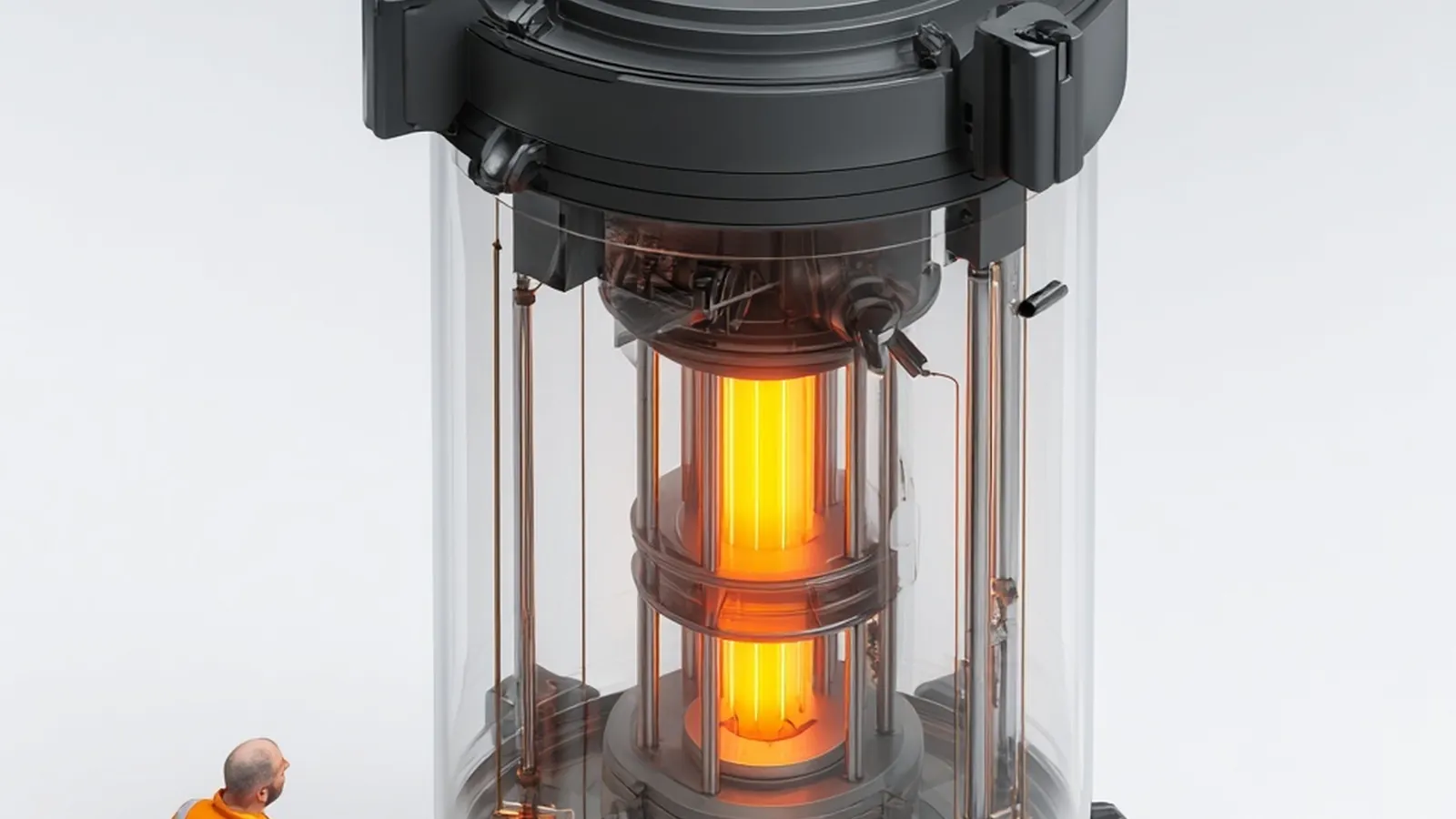
A nuclear digital twin becomes a verification layer when an independent party, not the reactor's operator, uses it to confirm that the reactor's reported state matches what its physics and its design permit, and records that confirmation so a third party can check it later. A twin that only mirrors the operator's own model is a simulation. A twin that independently confirms state is verification. The difference is who runs it and whether anyone outside the control room can rely on what it says.
That distinction is the subject of this post. "Digital twin" now appears in nearly every advanced-reactor pitch, usually as evidence that the vendor understands its own machine. Understanding your own machine is table stakes. The harder question, for a reactor designed to run remotely and with fewer people on site, is whether the twin can tell an outsider something the outsider can trust. In July 2026, Idaho National Laboratory and university partners demonstrated remote, real-time autonomous power control of a research reactor, with the reactor's safety systems retaining control throughout the test [1]. Remote-operations and digital-twin tooling sit at the center of that operating model. The MARVEL microreactor experiment, part of the DOE Microreactor Program, is designed to pair remote monitoring with a digital twin that supports operator functions [2].
RankShield Energy is a pre-applicant with the U.S. Nuclear Regulatory Commission (NRC), which means we are engaged in early regulatory interaction and hold no license or approval. This article is educational. It explains what separates a twin that simulates from a twin that verifies, why that separation depends on who owns the twin, and what has actually been demonstrated so far. The part most vendor material skips is the last one.
Key takeaways
- A digital twin that mirrors the operator's own model is simulation; a twin that independently confirms reactor state against measured data is verification.
- Verification requires closing the loop: comparing what the reactor actually reports against what the model and the design permit, on an ongoing basis.
- A vendor-internal twin is a form of self-attestation, because the party being checked also owns the checker.
- National-lab research treats the digital twin as part of the path to operating reactors remotely; translating that into an independent, buyer-facing verification layer is still in progress.
- If a vendor cites its digital twin as proof, ask who runs it, what it is compared against, and whether anyone outside the operator can check the result.
Simulation versus verification
A simulation predicts what a reactor should do. A verification layer confirms what the reactor is doing. The two use similar math and are easy to conflate, but they answer opposite questions. A simulation runs the model forward and produces an expected state. Verification takes the reactor's reported state and asks whether it is consistent with the model, the sensors, and what the design allows. One is a forecast; the other is a check on reality.
This matters because "digital twin" is used for both. A twin used purely as a design and training tool is a high-fidelity simulation, and a valuable one. National-lab work shows the twin operating alongside remote monitoring and autonomous functions [2]. But a simulation that agrees with the operator's own assumptions cannot, on its own, tell an outside party that the physical reactor is behaving. It can only tell you the model is internally consistent. To become verification, the twin has to be fed live measurement and made to disagree when the measurement and the model diverge. Not a mirror of the operator's model. A check on it.
Closing the loop between measured and modeled state
A digital twin verifies reactor state by closing the loop between measured and modeled state. In practice this has three parts. First, live measurement: temperatures, power level, control positions, and the status of safety functions are read from the reactor itself. Second, comparison: the twin computes what those quantities should be, given the model and the commands the reactor received, and flags where the measured values and the modeled values disagree beyond an expected margin. Third, recording: the comparison, and any divergence, is written to a tamper-evident record that a regulator, insurer, or lender can inspect later. RankShield Energy's approach is designed around this loop and around what we describe as multiple independent verifications of state change, so that a single reported change is confirmed against more than one line of evidence before it is trusted. All of this is design intent and is subject to analysis, testing, and NRC review; nothing here has been demonstrated to or accepted by the NRC.
The value of closing the loop is that disagreement becomes visible. A twin that only forecasts will happily produce a clean-looking state whether or not the hardware agrees with it. A twin that continuously compares measured against modeled state surfaces the gap the moment it opens, which is the difference between a reassuring picture and an actual check.
The independence question, or whose twin verifies
Closing the loop is necessary but not sufficient. The remaining question is who owns the twin doing the checking. If the reactor's operator builds, runs, and interprets its own digital twin, the twin is part of the operator's self-report. It may be excellent engineering. It is still the operator grading its own work, and an outside party has no independent basis to rely on it. In my view, that distinction is the whole game.
Independence here is structural, not a matter of good intentions. A verification layer carries weight for a lender or regulator only when the party running it is separate from the party being checked, so the checker has no stake in the reactor looking good. This is the same logic other high-assurance fields settled long ago: the thing being appraised does not get to be its own appraiser. Applied to a digital twin, it means the verifying twin, or at least the appraisal and the recorded result, should sit with an independent party rather than inside the operator's own software. A vendor-internal twin answers "does our model agree with our model." An independent verification layer answers "does the reactor agree with reality," in a form someone other than the vendor can check.
What remains to be proven
The honest state of the field is that the operating model is being demonstrated while independent verification of it is still being built. The July 2026 national-lab demonstration showed remote, real-time autonomous power control of a research reactor, with safety systems retaining control [1]. That is a national-lab result, not a demonstration of any commercial reactor's safety, and it is not RankShield Energy's result. National-lab research treats the digital twin as part of the path to operating and monitoring reactors remotely [1][2]. Turning that into an independent, buyer-facing verification layer, one that an outside party can rely on without asking the vendor to vouch for itself, is work still in progress across the industry, including at RankShield Energy. Anyone presenting a digital twin as settled proof that an autonomous reactor is safe is overstating where the field is. The accurate framing, for every serious developer, is design intent subject to testing and regulatory review.
Frequently asked questions
What is a nuclear digital twin?
A nuclear digital twin is a continuously updated software model of a reactor that runs alongside the physical machine. National-lab work pairs such a twin with remote monitoring and operator functions <sup><a href="#src-2">[2]</a></sup>. In its most common use, the twin is a high-fidelity simulation for design, training, and monitoring. It can also be used for verification, but only if it is fed live measurement from the reactor and made to compare that measurement against what the model and the design permit, rather than simply predicting an expected state. The distinction between a twin that forecasts and a twin that checks is the practical difference between simulation and verification.
Is a digital twin the same as a simulation?
Not necessarily. Every verifying twin contains a simulation, but not every simulation verifies anything. A simulation predicts what the reactor should do. Verification takes the reactor's actual reported state and confirms whether it is consistent with the model, the sensors, and the design limits, then records the result so it can be checked later. A twin that only runs the model forward, without closing the loop against live measurement, is a simulation. It becomes a verification layer when disagreement between measured and modeled state is detected, flagged, and recorded.
Whose digital twin should you trust, the vendor's or an independent party's?
For an outside party such as a regulator, insurer, or lender, independence is what gives the answer weight. A vendor-internal twin is run and interpreted by the same party that operates the reactor, which makes it a form of self-attestation. An independent verification layer places the appraisal and the recorded result with a party separate from the operator, so the confirmation does not depend on the operator's word. This does not replace the reactor's own engineered safety or NRC oversight; it is an additional, independent check on what the reactor reports.
Sources
This guide reflects the state of microreactor digital-twin and remote-operations work as of July 2026. This area is evolving rapidly; national-lab demonstrations are research results, not commercial approvals, and this page will be reviewed as new results are published.
About this article. RankShield Energy is a pre-applicant engaged in early regulatory interaction with the U.S. Nuclear Regulatory Commission (NRC). Nothing here should be read as a representation that any RankShield Energy design, product, or facility is NRC-approved, licensed, or certified, or that any safety, performance, or operational characteristic has been demonstrated or accepted by the NRC. Descriptions of reactor and system behavior reflect design intent and are subject to analysis, testing, and regulatory review. This article is for general educational purposes and is not engineering, legal, regulatory, or investment advice.
A note on how we write about our own reactor
HELIX is in pre-application development. Where this article touches our design, every figure is a design target and every physics result is unqualified screening, labeled as such. We cite authoritative sources (NRC, DOE, IAEA, national laboratories) and never invent statistics.
RankShield Energy · HELIX · pre-application